Degrees, Courses & Certifications
Explore 5 fascinating articles about degrees, courses & certifications
Plan your educational path in aerospace and space sciences. Find degrees, online courses, and professional certifications.
All Articles (5)
What Certifications Are Useful for Aerospace and Satellite Jobs?
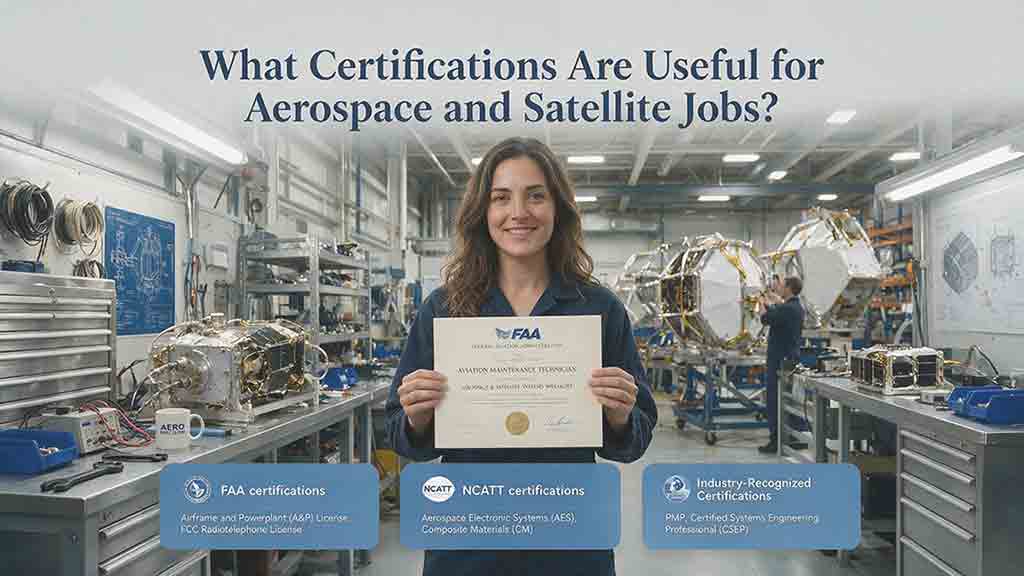
This guide helps students and professionals identify which certifications are genuinely useful for aerospace and satellite jobs. It maps INCOSE, IPC, ASQ, PMI, ISC2, AWS, NCEES, FAA, AS9100-related training, and IAQG auditor authentication to specific work such as systems engineering, electronics assembly, quality, reliability, project leadership, cybersecurity, cloud infrastructure, licensure, and regulated aviation activities. The article clearly distinguishes professional certification, course completion, organizational AS9100 certification, auditor training, IAQG authentication, government certificates, licenses, and security clearances. Original tools—including the Credential Gate Test, Certification Utility Score, One-Gate Rule, Credential Commitment Ledger, employer-demand audit, and a 30-day decision plan—help readers compare role alignment, eligibility, evidence value, portability, maintenance, and rule-change exposure. It also explains the 2026 IAQG transition, PMI’s announced PMP training-provider change, renewal burdens, accurate résumé wording, and why no credential guarantees employment, salary, professional authority, or access.

Online Courses That Can Help You Prepare for a Space Career
This guide helps students and career changers choose online courses that support a specific space-career goal rather than collecting unrelated certificates. It compares NASA, MIT OpenCourseWare, Harvard CS50, University of Colorado Boulder, EPFLx, and other official resources across programming, remote sensing, spacecraft dynamics, mission design, systems engineering, signal processing, and research practice. The article clearly separates free course materials, completion certificates, CS50 Certificates, edX verified certificates, Coursera Career Certificates, university credit, professional certification, and professional licenses. Original tools—including the Role-to-Course Evidence Chain, Course Utility Score, Four-Layer Learning Stack, Evidence Conversion Protocol, and a 12-week study plan—show readers how to identify a skill gap, select a suitable course, build an inspectable project, verify results, and state limitations honestly. It also explains ARSET certificate eligibility, course-age limits, academic-integrity rules, publication safety, and why coursework cannot replace required degrees, supervised experience, work authorization, or professional authority.

Do You Need a Master’s Degree to Work in Space Technology?
This guide explains when a master’s degree is required, preferred, optional, or unnecessary for space-technology careers. It compares bachelor’s-, associate-, master’s-, and doctoral-level entry routes across engineering, software, hardware, analysis, research, project work, writing, and technical operations. Readers learn how to distinguish an absolute degree requirement from a stated preference or an education-and-experience substitution. Original tools—including the Master’s Necessity Ladder, Master’s Pressure Index, Role-Gap Ledger, Replacement Test, and Graduate Commitment Ledger—help applicants audit job postings, identify whether their real gap is knowledge, evidence, experience, or credentials, and make hidden costs visible. A fictional spacecraft thermal-analysis example demonstrates the calculation process without presenting it as a hiring probability. The article also compares graduate-program formats, explains NASA and astronaut exceptions, addresses accreditation and licensure, and separates education from work authorization, export controls, and security-clearance requirements.
Best College Majors for a Career in the Space Industry
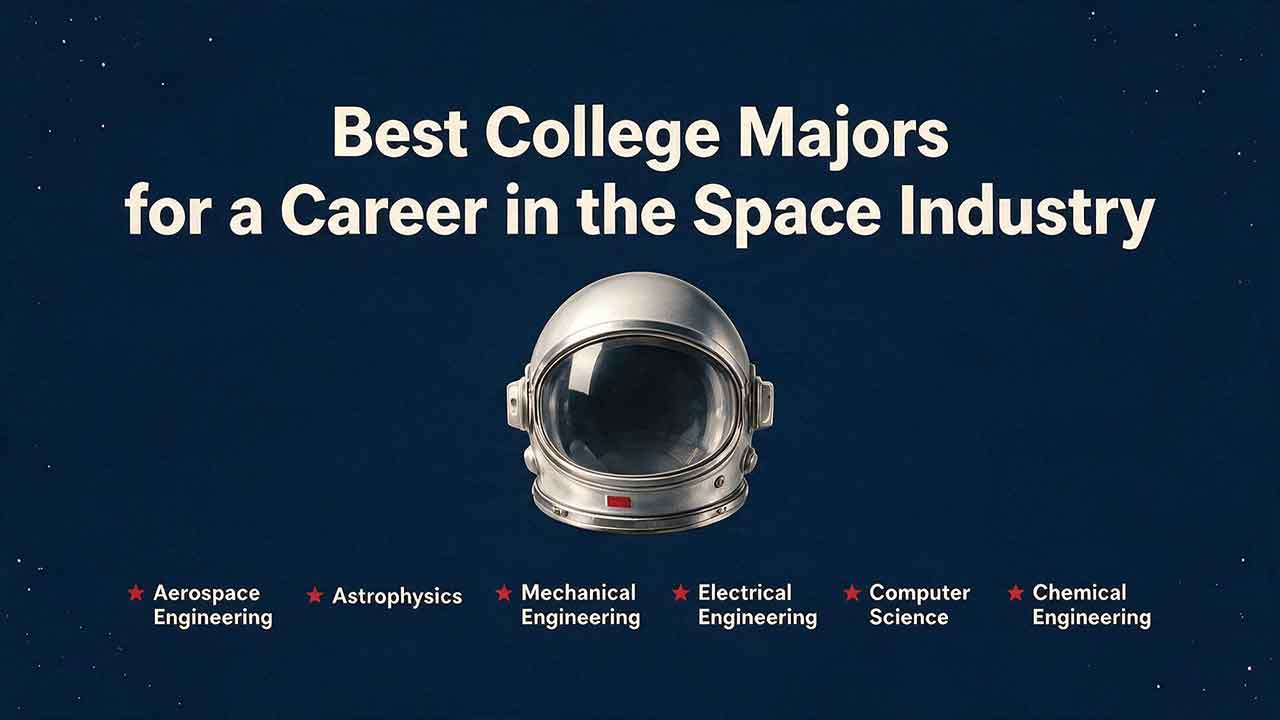
This guide helps students choose among engineering, computing, science, data, production, business, communication, policy, and legal-support majors for space-industry careers. Instead of ranking degrees by name, it connects each major to real mission outputs such as spacecraft design, avionics, software, research, Earth observation, manufacturing, procurement, and public communication. The article compares curricula, graduate-school expectations, salary data, accreditation, legal-education pathways, and international-student constraints while clearly separating occupations from degree outcomes. Original tools—including the Mission Output Map, Major-to-Mission Fit Score, Graduation Evidence Inventory, Bridge Load Test, and Two-Semester Major Validation Plan—help readers evaluate specific programs, identify missing preparation, estimate transition difficulty, and build credible work samples. Practical tables, worked calculations, troubleshooting guidance, and checklists give students a structured way to select a major that matches their intended work, financial limits, and long-term flexibility.
Astronomy vs Aerospace Engineering: Which Degree Should You Choose?
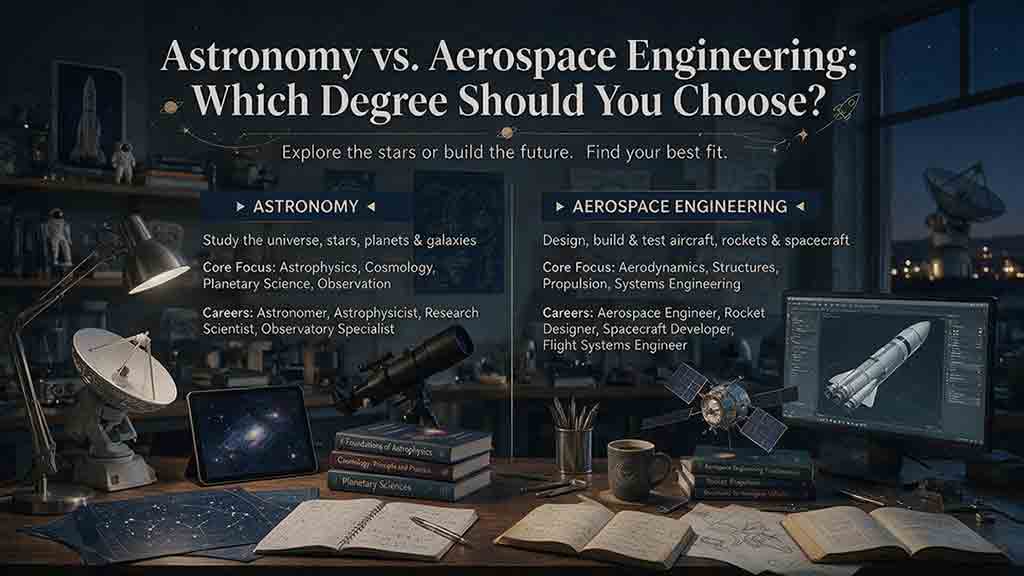
This guide helps students compare astronomy and aerospace engineering through the work each degree prepares them to do, rather than relying on stereotypes about stars, rockets, salary, or difficulty. It explains differences in curriculum, mathematics, programming, research expectations, bachelor’s-level employment, graduate-school pressure, ABET accreditation, and career flexibility. It also distinguishes occupation-wide wage data from recent graduate outcomes so readers do not make misleading salary comparisons. Original decision tools—including the Question–Artifact–Credential Test, Weighted Degree-Fit Worksheet, Salary Denominator Check, Curriculum-to-Outcome Audit, Gap Load calculation, and Bridgeability Principle—help readers evaluate specific programs, identify missing preparation, and compare realistic education paths. The article also covers double majors, minors, transition routes, common mistakes, a four-week decision plan, and a practical checklist. Readers can use the framework to choose astronomy, aerospace engineering, or a better-fitting alternative based on desired work, required credentials, program content, cost, and evidence they want to produce by graduation.