Space Career Paths
Explore 5 fascinating articles about space career paths
Explore diverse career paths in space exploration. From engineering and astrophysics to space law, policy, and business development.
All Articles (5)
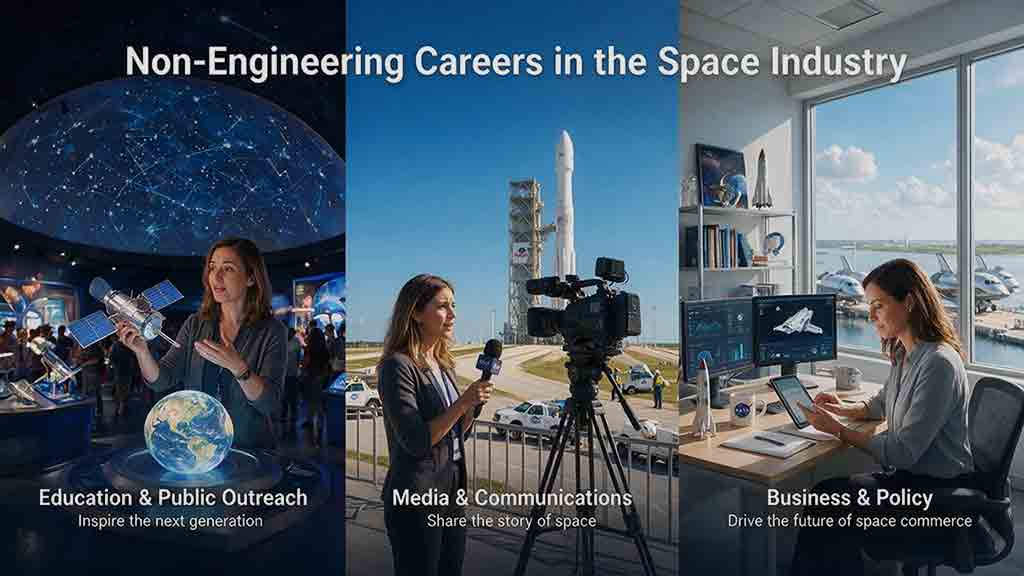
Non-Engineering Careers in the Space Industry
This guide explains how professionals without engineering roles can contribute directly to space missions through program management, procurement, finance, logistics, technical writing, communications, human resources, training, market research, legal support, policy, customer operations, and education. It compares relevant degrees and national salary benchmarks, clarifies the difference between non-engineering, nontechnical, and non-STEM work, and shows how each function manages a mission constraint such as money, time, suppliers, information, workforce, trust, or customer adoption. Original tools—including the Mission Enablement Ledger, Role Output Test, Mission Support Evidence Audit, and Six-Artifact Entry Plan—help readers choose a role, create realistic portfolio evidence, and evaluate career fit. The article also provides practical guidance on NASA and ESA career paths, internships, resumes, technical literacy, work authorization, export controls, background investigations, security clearances, and safe portfolio practices without promising employment or other outcomes.

Space Careers That Do Not Require a PhD
Space Careers That Do Not Require a PhD explains how readers can enter the space sector through engineering, software, operations, data, manufacturing, technician, logistics, communications, and project roles. It distinguishes a space employer from an occupation, preserves official BLS job titles and salary denominators, and compares routes from apprenticeships and certificates through associate, bachelor’s, and master’s degrees. The guide introduces the Mission Contribution Map, the Occupation–Employer–Task Test, the Role Proof Packet, and an Evidence Coverage self-audit to help readers choose a realistic role and build verifiable work samples. It also explains NASA internships, astronaut education requirements, ABET accreditation, security clearances, export controls, and work authorization without implying universal eligibility. Readers receive practical career tables, a physics-graduate example, a 90-day action plan, troubleshooting advice, and a readiness checklist. The article emphasizes that a PhD is not required for many space careers, but role-specific training and credible evidence remain essential.

How to Become a Satellite Systems Engineer
This guide explains how to become a satellite systems engineer by combining technical depth in one spacecraft subsystem with the systems-engineering skills needed to connect mission needs, requirements, interfaces, technical budgets, risks, verification, and operations. It compares suitable engineering degrees, maps common satellite subsystems to practical project evidence, and shows how to build a portfolio without access to flight hardware. Original tools include the Subsystem Anchor and Integration Spine Framework, the Tool-to-Decision Rule, the Mission Thread Portfolio Audit, and an educational satellite power-margin example. The article also covers software choices, entry-level job searches, interviews, INCOSE certification, professional licensure, salary data, international-student considerations, common mistakes, troubleshooting, and a 12-month career plan. Readers gain a practical method for turning coursework and projects into traceable engineering evidence while understanding the limits of occupational statistics, certifications, legal guidance, and publicly available technical standards.
How to Become an Astronomer
This guide explains how to become an astronomer through a practical, evidence-based education and career path. It covers degree options, core physics and mathematics courses, programming, research experience, PhD preparation, graduate funding, postdoctoral training, salaries, job outlook, international-student considerations, and astronomy-related careers outside traditional research. Original tools include the Astronomy Research Loop Audit, Research Contribution Ledger, Two-Market Portfolio Strategy, BLS Denominator Warning, and a one-year evidence plan. The article shows readers how to turn coursework and research into credible proof of skill, compare graduate programs and funding offers, prepare accurate application materials, and avoid common mistakes such as overstating discoveries or confusing combined labor statistics with astronomer-only data. It uses authoritative sources from BLS, O*NET, AAS, AIP, NSF, NASA, leading universities, and USCIS, while clearly explaining the limits of each dataset and avoiding guarantees about admission, funding, employment, or salary.
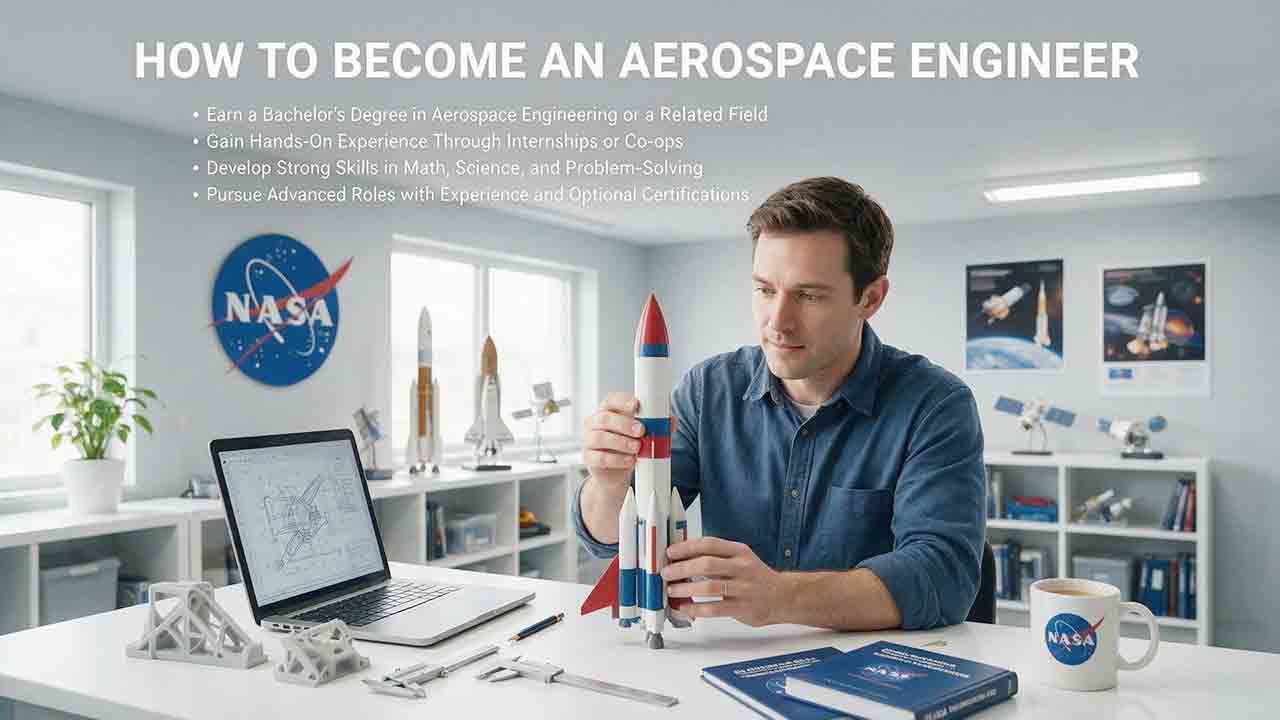
How to Become an Aerospace Engineer
This guide explains how to become an aerospace engineer through a practical, evidence-based career path. It covers degree options, ABET accreditation, engineering technology, federal qualifications, specialty selection, mathematics, programming, software, projects, portfolios, internships, technical interviews, salary data, licensure, export controls, and considerations for international students. Its original tools include the Aerospace Evidence Ladder, a 20-Posting Role-Match Method, a documented Boeing job-title snapshot, and a 90-day action plan. The guide shows readers how to convert coursework and software knowledge into verified engineering evidence through models, tests, trade studies, documentation, and clear technical communication. It also explains the limits of its labor-market snapshot, distinguishes employer job titles from broader occupational labels, and directs readers to authoritative sources such as BLS, O*NET, ABET, NASA, NCEES, OPM, BIS, and USCIS. Readers finish with a concrete framework for choosing a specialty, finding relevant roles, identifying skill gaps, and building a credible aerospace engineering portfolio.